Serbia Buys Back 15 Billion Dinars of Bonds at First Auction
The Public Debt Administration reported the first of five auctions: bids of 21.03 billion dinars, 15 billion accepted, yield 5.66%. Another 40 billion follows by December 4.
The Public Debt Administration has reported the result of the first auction in its early government bond buyback, held on Friday, November 20. The state bought back 1,500,000 twelve-year dinar bonds with a nominal value of 15 billion dinars, exactly the planned amount, while their market value comes to 14,332,515,000 dinars.
Bids submitted at the auction totaled 21,026,220,000 dinars, about 40% above the planned amount. Of that, 15 billion was accepted, roughly 71% of what was offered.
At what price were the bonds bought back?
The executed yield was 5.66% and the executed price 9,555.01 dinars per bond. The bonds bought were issued in 2020, carry a 4.5% coupon paid twice a year and mature on August 20, 2032.
The gap between nominal and market value is 667,485,000 dinars. Nominal value is the amount paid at maturity, while market value is the amount at which the bonds were actually bought back at the auction.
Why is the state buying back its own bonds?
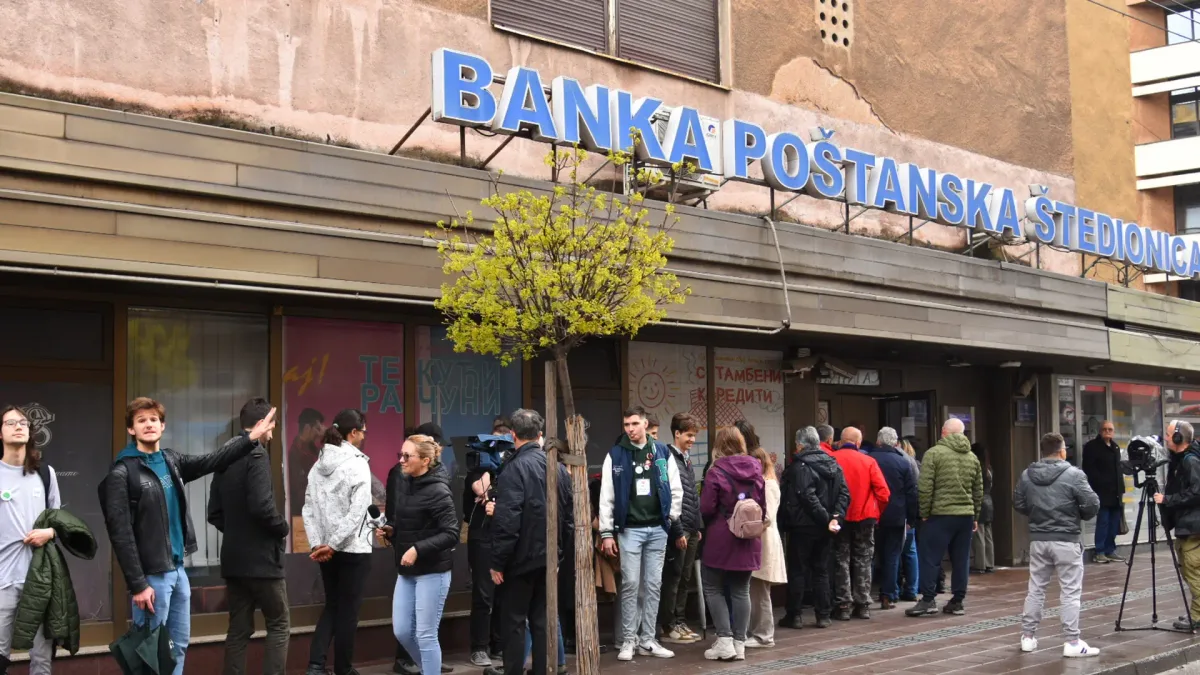
Finance Minister in a caretaker mandate Sinisa Mali said on the morning of November 20 that the aim is to let all holders offer their securities, including bonds of Postanska stedionica bank, so that the bank can strengthen its liquidity. He also explained how the decision was reached:
“The first auction will take place today. So, we approached the analysis of everything that has happened and is happening on the financial market very responsibly. We received the National Bank’s report on Postanska stedionica at the end of last week. The bank itself also sent us, the Finance Ministry and the government, its own report, and on that basis we are going ahead with the early bond buyback. That is, as I would put it, the least painful but most effective way to increase that bank’s liquidity, because after the collapse of Alta banka, fear has crept back into people’s bones,” Mali said.
Mali explained the same plan earlier this week on Instagram. “As a responsible government, in the coming period we will carry out early government bond buyback transactions, in order to improve the liquidity of Postanska stedionica bank and to give all bondholders the option to sell their securities,” he said. He added: “I also note that we did not want to go public before receiving reports from the competent institutions, so as not to contribute to greater uncertainty.”
On Wednesday Mali told Tanjug that the buyback would cover bonds in the Postanska stedionica portfolio worth up to 50 billion dinars, and that the bank would thus have enough money to pay out all depositors. The Public Debt Administration’s calendar carries a somewhat larger total of 55 billion dinars, spread over five auctions.
What comes next until December 4?
The remaining four auctions are worth 40 billion dinars in total:
- November 24: 10 billion dinars, bonds maturing in 2035 with a 5.25% coupon
- November 26: 10 billion dinars, bonds maturing in 2030 with a 4.5% coupon
- December 2: 15 billion dinars, bonds maturing in 2028 with a 5.875% coupon
- December 4: 5 billion dinars, bonds maturing in 2031 with a 7% coupon
The Public Debt Administration says the auctions are part of regular activities aimed at managing public debt, improving the domestic market for government securities and providing additional liquidity.
What does Kreni-promeni claim about international payment orders?
Alongside the buyback, a claim about the state of the bank itself has surfaced in public. The Kreni-promeni movement said that Postanska stedionica has not executed some international payment orders for more than 20 days, even though companies secured the money and submitted the required documentation. Clients are reportedly told that the reason is a wait for approval from the National Bank of Serbia.
The movement is asking the bank and the National Bank of Serbia (NBS) for “precise answers on why the payments were not made, on what basis they are waiting, who is responsible for deciding and by what deadline the problem will be resolved”. The statement also says that “the previous government, led by the Serbian Progressive Party, bears political responsibility for personnel and management decisions made during its mandate, and a change of government does not erase that responsibility”.
In the statements we have read, neither Postanska stedionica nor the NBS responds to these claims.