NASA: PUNCH Predicts Solar Storm Arrival Within 30 Minutes
Mission PUNCH tracked a coronal mass ejection almost the entire way from the Sun to Earth and pinpointed the solar storm's arrival time within half an hour, instead of the usual five hour window.

Scientists behind NASA’s PUNCH mission predicted a solar storm’s arrival at Earth with a margin of error of just 30 minutes. The result was presented on Tuesday, August 4, 2026, at a scientific meeting of the Committee on Space Research, and the paper is under review at the journal Space Weather. Methods currently used in space weather forecasting give a window of about five hours, making the new calculation roughly ten times more precise.
Solar storms occur when a coronal mass ejection, a massive cloud of material blasted out of the Sun’s outer atmosphere, reaches Earth’s magnetic field. The effects show up in radio communications, the power grid, satellites and internet infrastructure. The forecasting problem was never whether an ejection had launched, but when exactly it would arrive.
Why earlier instruments couldn’t track the whole path
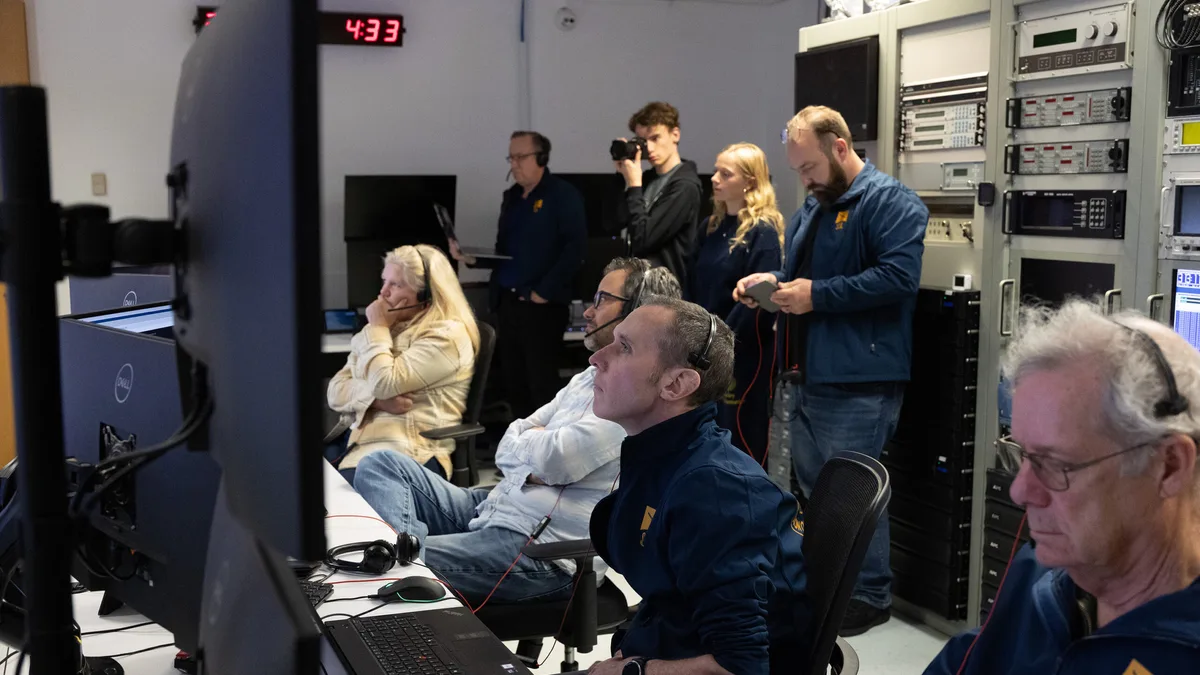
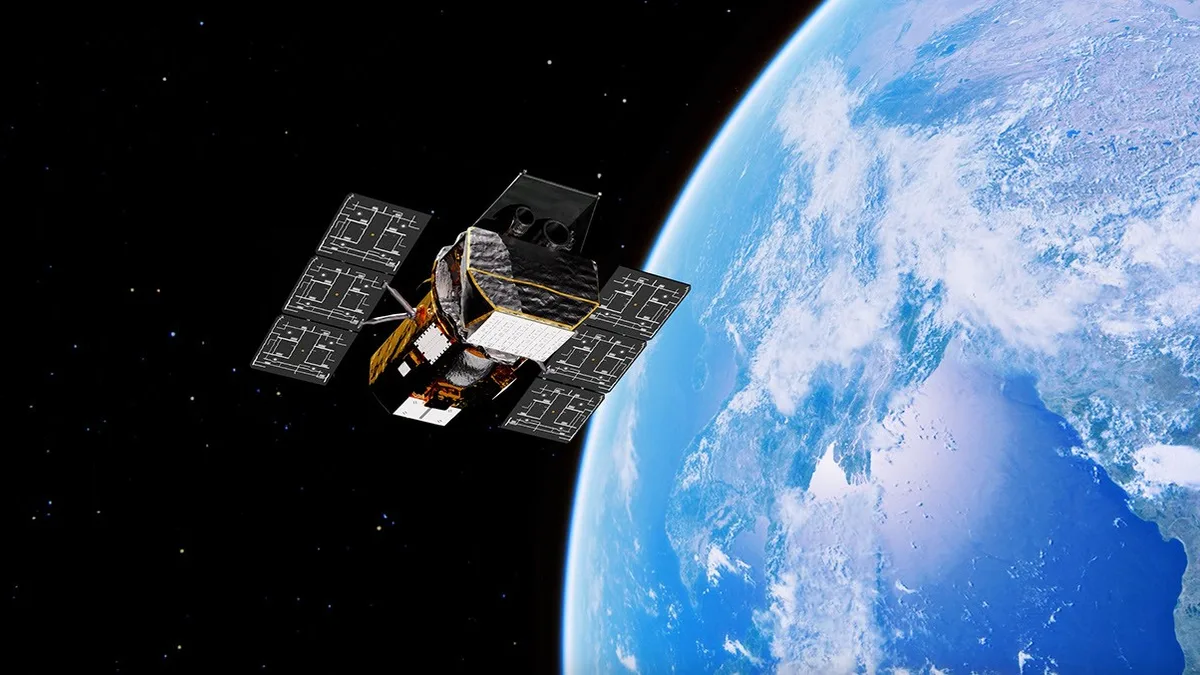
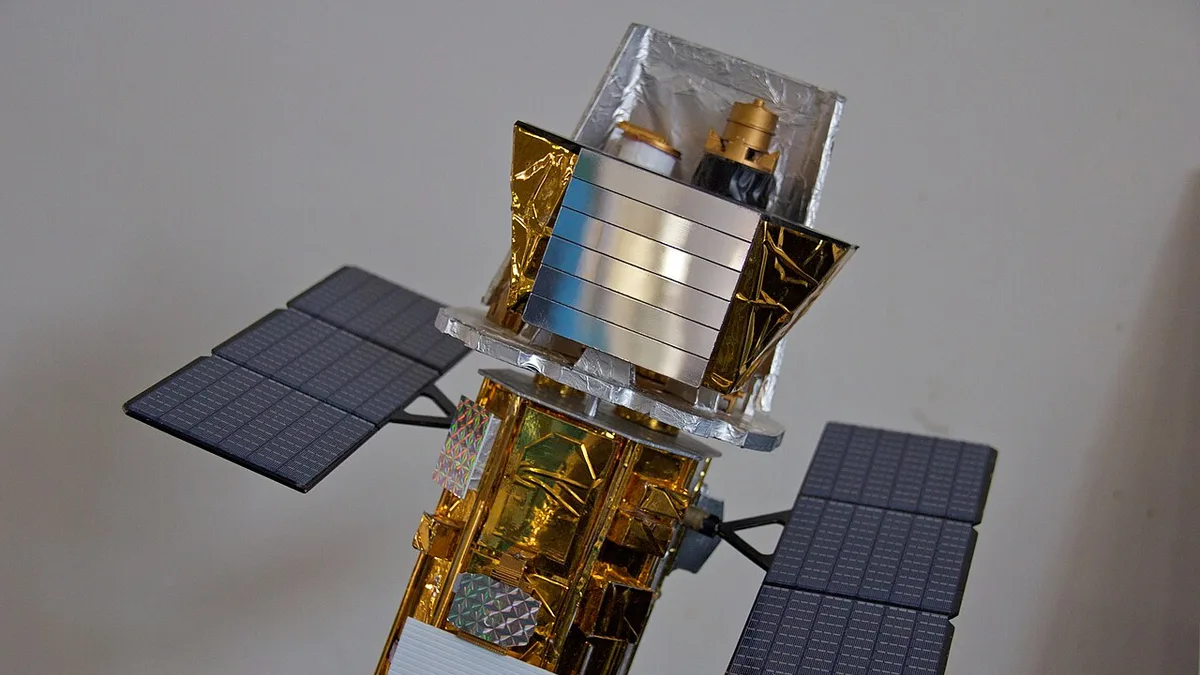
Before PUNCH launched in March 2025, instruments could follow an ejection for only about one fifth of the distance from the Sun to Earth. The rest had to be estimated. The mission’s name stands for Polarimeter to Unify the Corona and Heliosphere, and it consists of four coordinated small satellites in low Earth orbit, at an altitude of about 620 kilometers. Together they image a 90 degree swath of sky with the Sun at its center, producing a new picture every four minutes, so the cloud of material is now tracked almost the entire way to Earth. The mission is led by the Southwest Research Institute, with the satellites operated from its facilities in Boulder.
How did the model calculate the storm’s arrival?
The test was run after the fact, on a coronal mass ejection that left the Sun on May 31, 2025, a few months after launch. Scientists fed the images into a computer model that tracked the edge of the cloud and, from its speed and shape, calculated when it would reach Earth. After the first 12 hours of travel, the model settled on an estimate that the storm would arrive in eight hours. The actual arrival differed from that estimate by less than half an hour.
Craig DeForest, principal investigator of the PUNCH mission at the Southwest Research Institute in Boulder, Colorado, described the scale of the shift in a NASA statement:
To put that in perspective, this could be the equivalent for space weather forecasting of going from a steam engine to a modern internal combustion engine.
The comparison is about the class of accuracy, not about the forecasting job being finished. For a power grid operator or a satellite operator, the difference between a five hour window and a 30 minute margin is the difference between staying on standby and taking a concrete action scheduled for a specific hour.
What the images showed beyond arrival time
The wider field of view also produced a finding that has little to do with forecasting. In the high resolution images, scientists saw structures inside the ejection that had never been visible before: the clouds of material are less uniform than assumed and keep changing shape as they travel through the inner solar system. The same data are also used to track how plasma moves through space, so the findings could prove useful beyond the solar system too, in regions where stars form and where plasma is almost impossible to study at small scales.
What this result still doesn’t prove
This is a single event and a retroactive check against an already known outcome, not a live forecast issued before the storm arrived. The paper has not yet passed peer review, so an independent check of the methods is still pending. A single test also doesn’t show whether the same accuracy holds for slower ejections, ones that hit Earth at an angle, or ejections during periods of weaker solar activity.
One detail does support the method’s usefulness. The team says the model itself indicated when its estimate had stabilized, which gives forecasters a sense of how much to trust the number at any given moment. Scientists behind the mission believe that with more precise data and better models, the arrival of an ejection could be predicted even earlier than it is now.