Link Spacecraft Gets Within 15 Kilometers of Swift
Katalyst Space Technologies photographed and measured NASA's doomed Swift telescope, but had no fuel left to save it. Swift is set to reenter the atmosphere before the end of 2026.

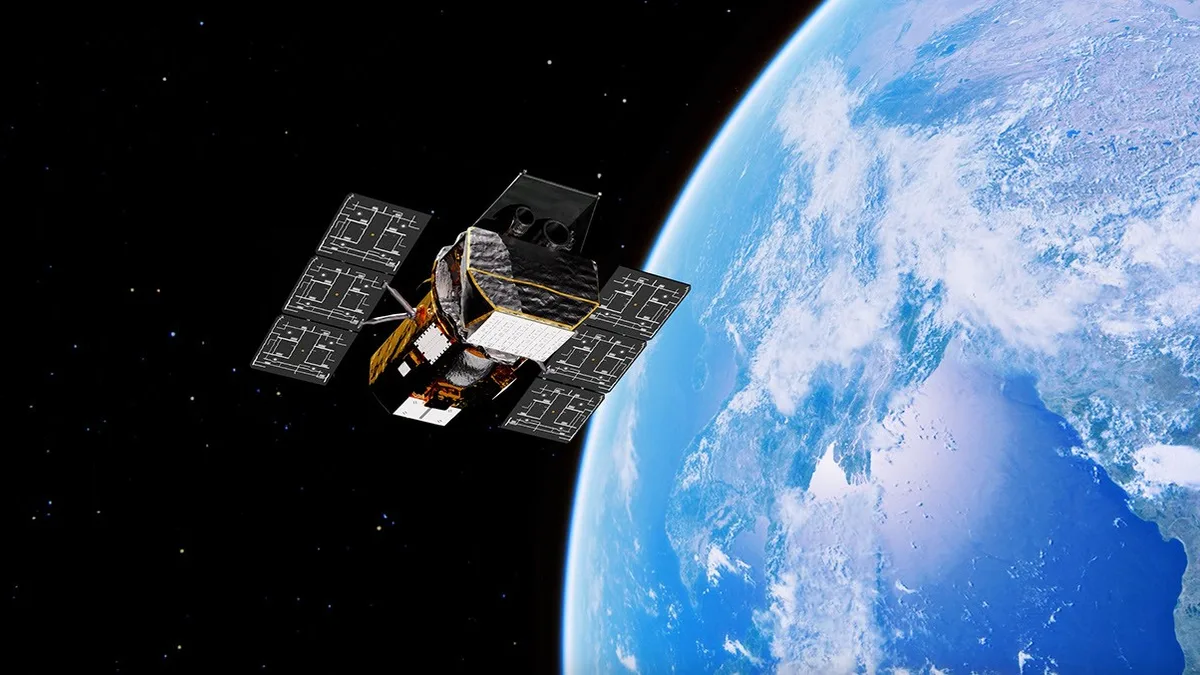
Katalyst Space Technologies’ robotic spacecraft Link closed to within just 15 kilometers of NASA’s doomed Neil Gehrels Swift telescope on Tuesday, September 1. The spacecraft used its own sensors to photograph the telescope and gather data on its condition for NASA, but it did not have enough fuel left to push Swift into a higher orbit. That officially closed out a rescue mission NASA paid 30 million dollars for without achieving its goal, leaving Swift on course to reenter the atmosphere before the end of 2026.
“We got so close, and yet so far,” Katalyst CEO Gonhi Li said in a statement after the approach.
Link launched on July 3, 2026, aboard a Northrop Grumman Pegasus XL rocket, in a joint mission between NASA and Katalyst. Weeks after launch, a fault in the spacecraft’s orientation system sent it into an uncontrolled spin. Flight controllers stopped the tumbling and stabilized the craft, but in doing so burned through fuel that had been earmarked specifically for lifting Swift into a higher, longer-lasting orbit. NASA and Katalyst announced back in August that the rescue would not go as planned, but decided to attempt the approach anyway, as practice for future satellite-servicing missions.
Gonhi Li attributed Link’s problems to the rush in which the spacecraft was assembled. The entire mission was put together in just nine months, and engineers, he said, often had to work with whatever parts were on hand rather than the ones they would normally have chosen. Both NASA and Katalyst had gone in expecting a fast-moving project with an uncertain outcome, with the one serious worry being that a collision between the two spacecraft in orbit could create a cloud of debris.
NASA Administrator Jared Isaacman assessed the mission the week after the launch of the Roman telescope. “Unfortunately, the outcome wasn’t what we hoped for. But this is exactly the kind of mission NASA should be flying,” Isaacman said. In a statement on the mission, he added a broader point:
“NASA needs to be ready to move fast and take smart risks when the potential payoff is worth it, and that’s exactly what we did with this mission.”
Isaacman said it makes sense to extend the life of valuable spacecraft when that is cheaper than replacing them, and that this is precisely why the Roman telescope was designed to be refuelable, even though it will orbit a point 1.6 million kilometers from Earth. Shawn Domagal-Goldman of NASA’s Astrophysics Division said the mission had already paid off regardless of the outcome: “Building, testing, and flying this mission has already strengthened the backbone of the American space industry.”
According to Gonhi Li, it’s unlikely Link has enough fuel left for another close approach to Swift. The spacecraft will still keep testing its three robotic arms, each about a meter long, and keep sending back data before it burns up in the atmosphere within a few weeks. Katalyst is already developing its next spacecraft, which could potentially help boost the orbit of Hubble, whose lifespan has also been cut short by heightened solar activity. “Hubble’s still got a few years left in it, right? The good news is this isn’t urgent,” Li said.
Swift launched in 2004 with a planned lifespan of two years and has now been in orbit for 21 years and nine months, tracking gamma-ray bursts and other short-lived cosmic events. Its orbit had dropped to 335 kilometers by the end of last week, less than half its original altitude, and the decay is accelerating because of heightened solar activity. NASA resumed observations with the telescope last week after halting them earlier in the year to conserve power, and expects Swift to reenter the atmosphere sometime between October and the end of 2026. The exact date still depends on how active the Sun remains, so NASA is not yet giving a more precise window.