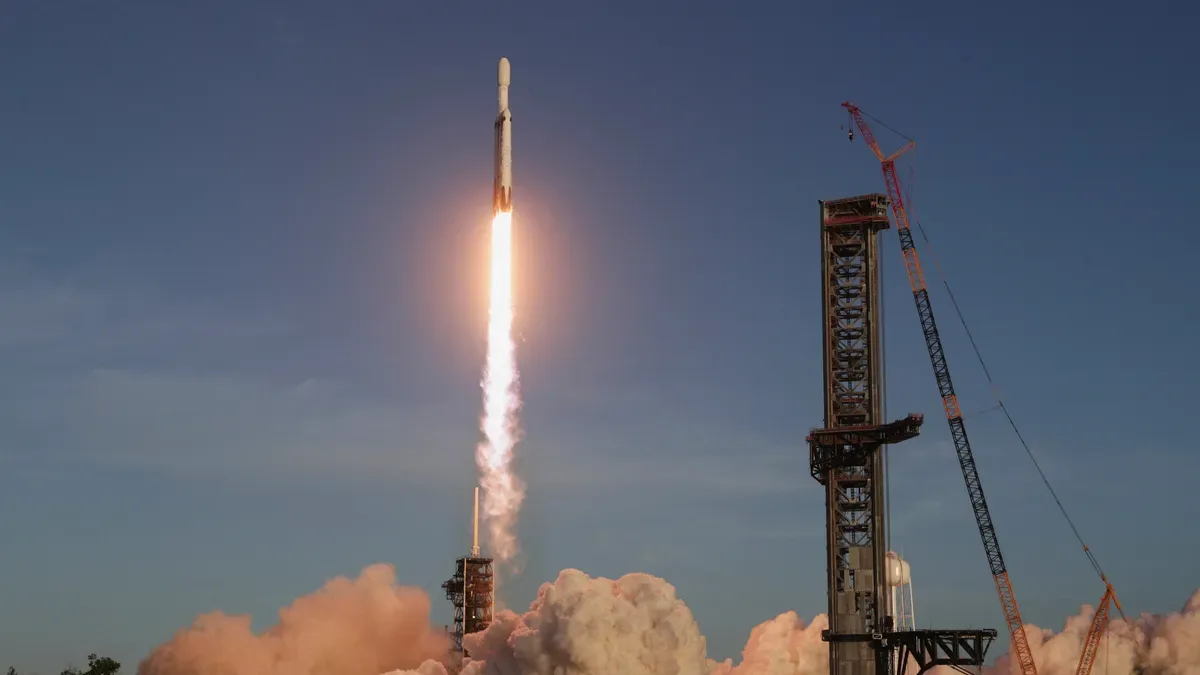
US Wants 1,000 Rocket Launches a Year by 2030
A new White House document from August 20 scraps Obama's 2013 policy and calls for more than 1,000 spacecraft launches and reentries a year by 2030, with fresh deadlines for spaceports.

The White House signed a new National Space Transportation Policy on August 20, a document designated NSPM-17, and American outlets reported on it a day later, on August 21. It is the first rewrite since 2013 of the rules governing spacecraft launches and reentries, and it sets a hard numerical target: by 2030, US launch and landing sites should be able to handle more than 1,000 launches and reentries a year, roughly three operations a day on average.
The document replaces the policy set in 2013 under President Barack Obama, which favored government heavy-lift rockets at a time when the commercial space industry was still getting off the ground. The new policy puts the commercial sector front and center: federal launch and landing sites are to be made available to commercial users, and the Department of War and NASA are directed to give preference to commercial launch services wherever possible.
Sources disagree on exactly how many spacecraft the US launched in 2025. The Washington Times, citing the Department of Transportation, reports that the United States carried out 217 of the world’s 329 commercial launches. SpacePolicyOnline cites a different figure, 176 orbital launch attempts from US soil, while Space.com puts the number at under 200. The gap likely comes down to methodology, orbital launches versus all commercial flights including suborbital ones, but every source agrees that a target of more than 1,000 launches a year by 2030 would mean a multi-fold jump in just a few years. The Washington Times also points to a further horizon: by 2035, it expects as many as 10,000 launches and reentries a year under Federal Aviation Administration (FAA) authorization.
The document also sets concrete deadlines for federal agencies. The Secretary of Transportation has 180 days to identify possible new launch sites, while the Secretary of the Interior has 90 days to locate federal land for an additional reentry site. The president’s science and technology adviser was given the same 180-day window to draw up a space transportation industrial base strategy, which the policy requires to be revisited every two years. Requests from foreign spacecraft to launch or land on US soil will be reviewed case by case, with a recommendation due within 60 days, and one of the criteria is verifiable foreign investment in the US space market.
According to figures cited by the Washington Times, 83 percent of today’s US launches happen at just three sites: Vandenberg Space Force Base in California, Cape Canaveral, and Kennedy Space Center in Florida. Getting anywhere near a thousand launches a year will require new pads. Transportation Secretary Sean Duffy, on the Friday before the policy was unveiled, asked the public and industry for proposals on new spaceport locations and on airspace that would get priority for launch corridors. FAA Administrator Bryan Bedford said at the time:
“Public input is essential as we plan the future of commercial space transportation. By listening to industry, local communities, aviation stakeholders and the broader public, we can better identify sustainable spaceport locations and develop air routes that support more frequent launches while upholding the highest standards of safety and efficiency.”
The public comment process Duffy announced has only just begun, so the locations of any new spaceports are not yet known.
The document also tasks NASA and its administrator, Jared Isaacman, with facilitating commercial transport to the Moon and back, as well as commercial access to Mars, both robotic and, eventually, human. That builds on a White House executive order from this past December, which set a goal of Americans landing on the Moon again in 2028 through the Artemis program. Presidential science and technology adviser Michael Kratsios said this “commercial first” approach is what will get Americans to the Moon by 2028.
As before, US government payloads must generally fly on rockets built in the United States, with limited exceptions for international agreements that involve no exchange of money and for secondary science payloads. The Department of War has specifically been tasked with examining what currently stands in the way of launching within 48 hours of an order, so the country can respond faster in a crisis or if a launch system fails.
This is the first time we have covered this policy; previously we only followed individual NASA missions. The policy itself remains a framework with deadlines rather than a finished plan for now: the locations of new launch pads, federal land for spacecraft landings, and the industrial base strategy still have to be worked out over the next 90 to 180 days. Only once those deadlines pass will it become clear whether the goal of 1,000 launches a year by 2030 is achievable.